Building a Digital Presence That Actually Grows Your Business

TL;DR
A digital presence isn't a checklist, it's a system, and most SMBs build the wrong one for their actual goal. Pick one objective (awareness, leads, or sales), then anchor it on owned (website), rented (social), and borrowed (Google Business, marketplaces) real estate. The businesses that win aren't the ones with the biggest budgets — they're the ones with a plan and the team to feed it.
Most small business owners treat "building a digital presence" like setting up a lemonade stand. Put up a page. Post on Instagram twice. Wait for customers. Six months later — crickets.
Here's the truth: a digital presence isn't a checklist. It's a system. And most businesses build the wrong system for their actual goal, then blame the internet when nothing happens.
This is the playbook we use at DSRPT when we help small and mid-sized businesses go from invisible to impossible to miss.
The Myth That's Keeping Small Businesses Offline
The single most common belief we hear from business owners? "Digital is for big brands with big budgets."
It's wrong. Flat-out.
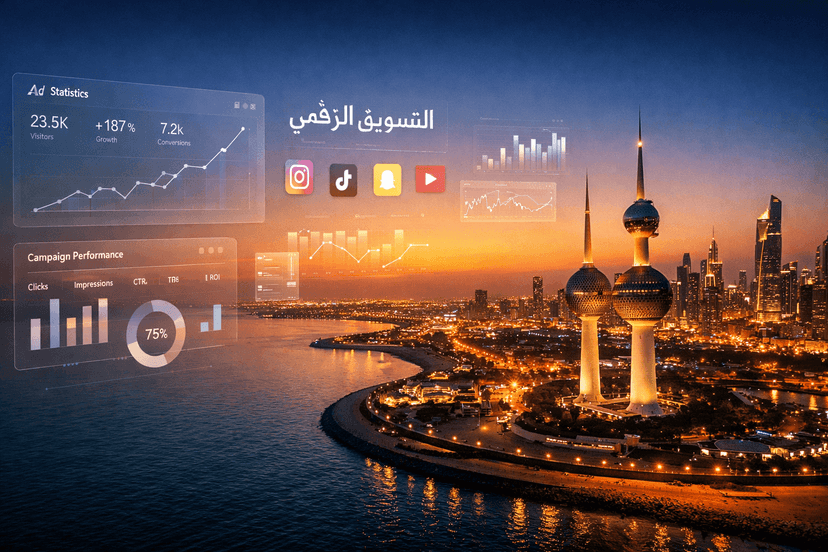
A strong online presence is cheaper than opening a physical branch, grows faster, and reaches further. I've watched a single-location cafe in Kuwait triple its weekly orders with a Google Business Profile, 30 photos, and a steady flow of reviews. No ad spend. No agency. Just the free stuff, done right.
The businesses that lose aren't the ones without money. They're the ones without a plan.
Digital Presence, Defined Properly
A digital presence is every place a customer can find you online. That's:
- Your website
- Social media accounts (the ones that matter to your audience)
- Your Google Business Profile and Maps listing
- Third-party marketplaces (Talabat, Amazon, Booking.com, delivery apps)
- Review sites and industry directories
Not all of these matter for every business. A law firm doesn't need TikTok. A cafe probably doesn't need LinkedIn. The point isn't to be everywhere — it's to own the places your buyers actually look.
The Three Objectives — Pick One Before You Build
Every digital presence serves one of three jobs. Before you build anything, decide which one is yours. Getting this wrong is how businesses waste $20,000 building the wrong thing.
1. Brand awareness. You want people to know you exist. Your logo, your services, your team. This is a digital business card, scaled up. Works well for service businesses, consultants, professionals. An informational site + active social is usually enough.
2. Lead attraction. You want prospects to reach out so your sales team can close them. This needs a conversion-focused website, clear calls to action, lead capture, and fast follow-up. Think car rentals, clinics, hotels, B2B services. We've written before on why local SEO is the most underrated growth channel in Kuwait — this is exactly where it shines.
3. Direct sales. You want customers to buy without ever talking to a human. This is e-commerce, SaaS, digital products. You need a store, payment gateway, inventory sync, and automations — plus serious attention to UX and trust signals.
Most businesses try to do all three at once. Don't. Pick the one that matches your business model right now. Add the others later.
Where You Actually Need to Show Up
Your digital real estate breaks into three zones:
Owned: Your website. The only asset you control completely. Even in the AI era, yes, you still need one.
Rented: Social platforms. Great for distribution, terrible as your only home. One algorithm change and your reach evaporates.
Borrowed: Third-party platforms — Google Maps, delivery apps, booking sites, review platforms. These bring you customers but take a cut and dictate the rules.
A healthy presence uses all three. Owned is the foundation. Rented is where you get discovered. Borrowed is where transactions happen for certain business types.
The social platform cheat sheet
- Facebook → 25-44 age bracket, strong for local community businesses, still dominant for Middle East SMBs
- Instagram → 18-34, visual products, shopping-integrated, essential for retail and F&B
- TikTok → under 25, short video, fastest organic reach if you can produce content
- YouTube → long-form, evergreen, searchable. A 2021 video can still drive leads today.
- X (Twitter) → niche, tech and media, good for thought leadership
- LinkedIn → B2B decision makers, professional services, recruitment
Pick two. Maximum. Do them properly before adding a third. We break this down further in our guide on choosing the right social channels.
Website: Full Control vs Plug-and-Play
Two roads when building your website:
Full control — custom build or self-hosted WordPress on cloud infrastructure. More flexibility, lower long-term cost, better SEO, but you need someone to manage it. This is what we build for clients who plan to scale.
Plug-and-play — Shopify, Salla, Wix, Squarespace. Easier to launch, higher monthly fees, locked into the platform's limits. Fine for starting out. Painful when you outgrow it.
Which should you pick? Depends on three things: how much you plan to customize, how important SEO is to you, and whether you have anyone to manage a self-hosted site. Our decision guide on CMS choice in Kuwait walks through this in detail.
One warning → don't pick based on what's cheapest today. Pick based on what you'll need in 18 months. Migration costs are brutal.
The Team You Actually Need
A digital presence isn't a "set it and forget it" asset. It's a living thing that needs feeding. Here's the minimum team behind a growing presence:
Web development
- Front-end developer (the part users see)
- Back-end developer (the engine underneath)
- A site manager to keep it updated, patched, and fast
SEO
- Someone who understands technical SEO, content SEO, and local SEO — and keeps up with algorithm shifts
- This is not a one-time job. Google changes. So does your competition.
Content production
- Writers who can produce SEO content, social copy, and email
- Designers for social graphics and website visuals
- A photographer or videographer for real product/team content that AI can't fake
Most small businesses can't afford all of this in-house. That's where an agency partner makes the math work — you get a team for less than the cost of one full-time hire.
How DSRPT Helps You Build a Presence That Grows
Here's where we come in — and we'll be direct about it because that's how we work.
DSRPT has been building digital presences for SMBs across Kuwait, the GCC, and Australia for years. We don't sell templates. We build systems that match your business goal, then run them with you.
What we actually do for clients:
- Strategy first. We start with a discovery sprint — your objective, your audience, your competitors, your numbers. No building until we know what winning looks like.
- Website design and development. Custom builds, WordPress, Next.js, Laravel — whatever fits. Fast, secure, SEO-ready from day one. Here's our full guide to building a site Google actually loves.
- SEO and Google Business Profile management. Technical foundation, content strategy, local optimization, and review management. Local SEO alone is the single most underrated growth lever in the region.
- Content production. Copy, graphics, commercial video, photography, drone work — full in-house creative team. No subcontracting to freelancers who ghost you.
- Social media management via GoSocial. Our dedicated service for businesses that need consistent posting, community management, and actual engagement — not just scheduled filler.
- Paid media. Google Ads, Meta Ads, TikTok. We only spend when the math works. Here's why so many GCC businesses waste their ad budgets — and how we avoid that.
- AI integration. Via GoAI, we build AI agents, automations, and workflows into your presence so it scales without hiring more people.
The difference isn't that we do all the services. Plenty of agencies do. The difference is we treat your business like a partner's, not a client's. We pick battles with you. We tell you when you don't need something. We'd rather grow with you for 5 years than bill you for 5 months.
Next Steps
If you're starting from zero, do this in order:
- Decide your one objective — awareness, leads, or sales
- Claim your Google Business Profile today (it's free, takes 30 minutes)
- Audit where your competitors show up — that's your shortlist
- Pick the website approach based on your 18-month plan, not your 18-day plan
- Commit to content production before you build anything — if you can't feed it, don't build it
If you want us to run the whole thing — or fix what's already broken — book a call with DSRPT. We'll tell you what we'd actually do, what it costs, and whether it's worth it. No pitch deck. No fluff. Just the plan.
Frequently Asked Questions
What is a digital presence for a small business?
A digital presence is every place your business shows up online — your website, Google Business Profile, social media accounts, directory listings, and third-party marketplaces. For a small business, it's the sum of everything a potential customer can find when they search your name, your service, or your category. A strong digital presence does three jobs at once: it builds awareness, attracts leads, and drives sales.
How much does it cost to build a digital presence for a small business?
You can start for under a few hundred dollars — a basic WordPress site, a Google Business Profile, and one or two social accounts. But a presence that actually grows revenue usually runs $2,000 to $15,000 to build, plus ongoing content and management. The real cost isn't the setup. It's keeping it alive — content, SEO, responses, updates. Budget for the ongoing work, not just the launch.
Which social media platforms should a small business use?
Pick platforms based on where your customers actually spend time, not where you like to scroll. Instagram works for visual products and audiences 18-34. Facebook still dominates for 25-44 and local community businesses. TikTok is essential if you're selling to under-25s. LinkedIn is the move for B2B. Two platforms done well beat five done poorly. Check what your competitors use — then decide if that's where you need to be.
Do I need a website if I already have social media?
Yes. Social accounts are rented land — the platform owns your audience, the algorithm decides your reach, and one policy change can wipe you out. A website is the one digital asset you actually own. It's where Google sends buyers, where your SEO compounds, and where you control the experience. Social media feeds the website. The website closes the deal.
How long does it take to see results from a digital presence?
Paid channels like Google Ads can drive traffic within days. Organic results — SEO, content, social growth — typically take 3 to 6 months to show meaningful movement, and 9 to 12 months to compound into steady lead flow. Anyone promising overnight organic growth is lying. The businesses that win are the ones that start early and stay consistent.