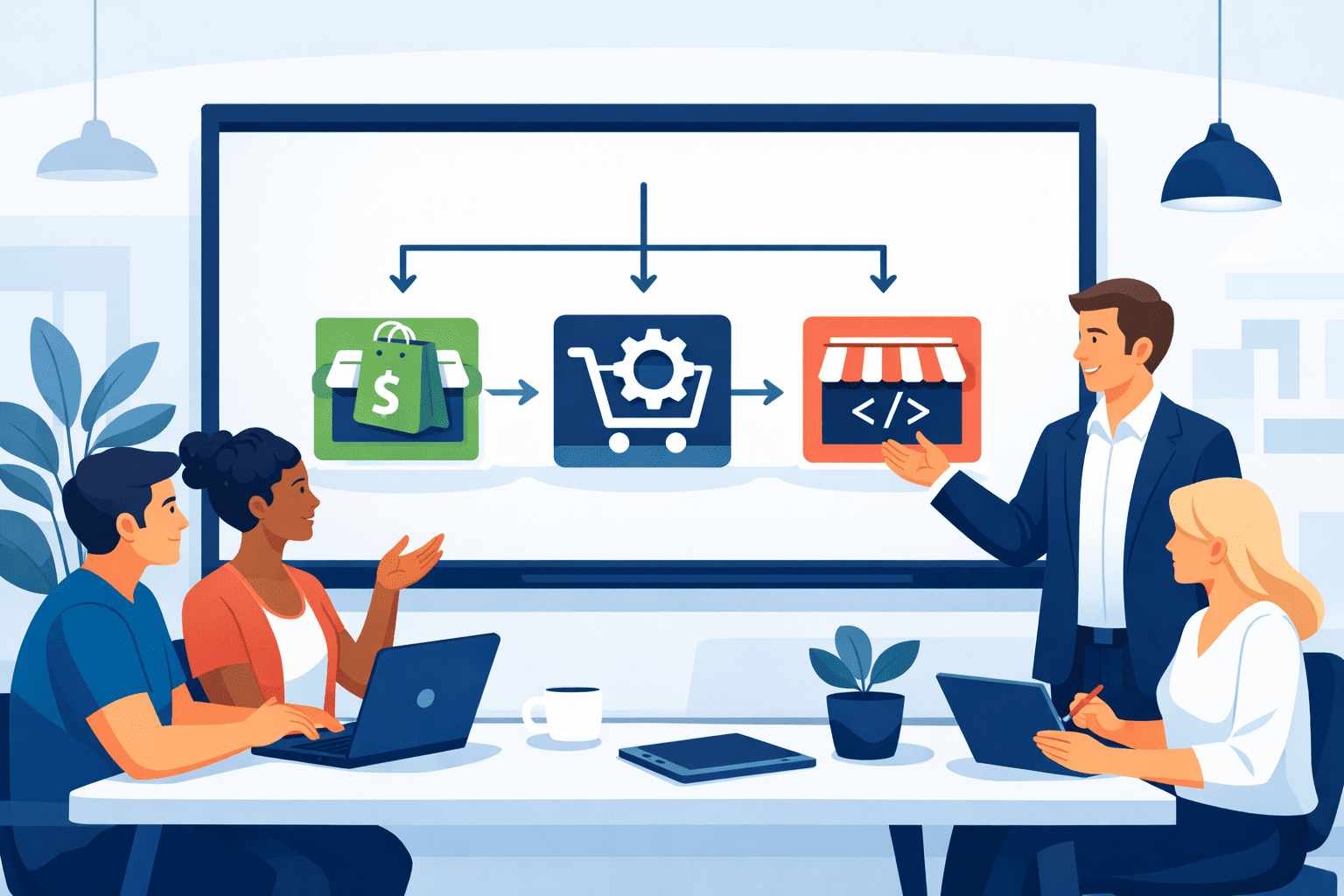
Claude Opus 4.7 and Anthropic's AI Design Tool Launch
TL;DR
Anthropic is shipping Claude Opus 4.7 and a new AI design tool this week — a frontier model upgrade paired with a product that generates websites, landing pages and presentations from plain text. Figma and Wix already dropped on the leak, and the design software sector is bracing for impact as the starting point of design work shifts from blank canvas to prompt. Opus 4.7 itself brings sustained agentic work, better reasoning, and a new Routines feature for scheduled AI workflows. Agencies billing hourly for landing pages are most exposed; founders and marketing teams gain the most. This is week one of a frontier cycle — move early or be three product iterations behind a year from now.
figma and adobe dropped on Monday. No outage. No scandal. Just one story in The Information saying Anthropic is about to launch two things this week — a new model called Claude Opus 4.7 and a tool that builds websites and presentations from plain text.
That kind of market reaction doesn't happen for incremental releases. And the week of April 14 isn't even quiet otherwise — OpenAI has announcements queued up, Meta is running LlamaCon, and analysts are already calling it one of the busiest weeks in AI history. So what's actually going on inside the Anthropic news, and what should you do about it?
Here's the short version: the way most businesses design websites, landing pages and decks is about to change. Again. And this time, the tools competing aren't Canva clones — they're full design engines wired into a frontier AI model.
What Anthropic Is Actually Launching
Two products, one week.
- Claude Opus 4.7 → an upgrade to Anthropic's flagship model. Better at long, multi-step agentic work. More reliable. Tighter guardrails. Builds on Opus 4.6, which dropped in February with a one-million-token context window.
- An AI design tool → generates websites, landing pages and presentations from natural-language prompts. Targets both developers and non-technical users.
The launch comes bundled with a few more pieces. A Figma partnership that converts AI-generated code into editable Figma files. Claude integrations already shipping inside Microsoft Word and PowerPoint. A new "Routines" feature that lets developers fire off Claude workflows on a schedule, via API, or from a GitHub event — basically cron for AI agents.
And there's a shadow in the background: Claude Mythos. Reports describe it as a more powerful model Anthropic has held back from the public over cybersecurity concerns, run inside an internal program called Project Glasswing, expected to surface at a San Francisco reveal in May. Opus 4.7 is the model you can buy. Mythos is the model they won't sell you yet. Worth keeping on your radar — the gap between those two tracks is probably where the next real jump in capability actually lives.
I've been tracking Anthropic's release cadence since January, and the pattern is consistent: they don't do flashy single launches. Every couple of weeks, another update drops — sometimes a model, sometimes a feature, sometimes an integration. They stack releases until the combined shape of the product is something nobody else has. And right now that shape is starting to look less like a chatbot, and more like a design-and-build studio with a very smart worker inside it.
Why figma and adobe Dropped on Monday
The stock market isn't a perfect signal. But it's a fast one.
When a rumor moves billions in market cap before a product ships, investors are saying one thing: the risk is real. Not that Figma disappears. Not that Adobe loses Photoshop. The risk is narrower and sharper — the starting point of design work is moving from a blank canvas to a prompt.
Think about what that means in practice:
- A founder who needs a landing page doesn't open Webflow. They type a paragraph.
- A sales lead who needs a 12-slide deck for Tuesday doesn't open PowerPoint. They describe the pitch.
- An agency that builds 30 client landing pages a month doesn't buy more seats. They prompt, review, ship.
The old tools don't vanish. They get shoved further down the funnel — closer to the polish and tweaking stage, away from the initial build. That's a massive revenue reshuffle for anyone charging by the seat.
Adobe, Wix, Figma and Canva all have the same quiet problem now: their business models assume you open the tool first. The moment you open an AI design tool first, every metric they care about — seat growth, time-in-app, conversion to paid — starts to wobble.
Zoom out and the pattern gets uglier. The S&P 500 Software and Services Index is down nearly 26% year-to-date in 2026. Previous Anthropic launches — the Claude Cowork assistant, its automation plugins — already triggered noticeable software selloffs earlier this year. The market isn't reacting to one product. It's pricing in a multi-year shift where AI tools eat a large slice of traditional software demand.
We covered a related angle in Adobe vs Canva: The Plot Twist Nobody Saw Coming — the short version is that the design market was already fracturing before this. Anthropic just kicked the wall harder.
What the AI Design Tool Actually Does
Based on what's been reported so far, the tool handles three main jobs:
- Website generation — full landing pages and small sites from a prompt, ready to host
- Presentations — complete decks, not just single slides
- Code + design handoff — the Figma partnership means the output isn't just a frozen image, it's editable code and editable design files
That third piece is the one most people are sleeping on. I've tested Gamma, Canva Magic Design, Figma Make and half a dozen smaller AI design tools for client work over the last year. Every one of them has the same problem — you get output that looks 80% right but you can't edit it where it matters. Colors, copy, layout. All locked in a generation you can't surgery into shape.
If Anthropic's tool actually produces editable Figma files and clean code, it skips the wall that killed a dozen competitors. It plugs into the workflows designers already have, instead of asking them to abandon their stack.
Direct comparisons to watch:
- Gamma — currently the default for AI-generated decks. Fast, clean, but limited outside presentations.
- Google Stitch — Google's app design generator, tight integration with the Google stack.
- Canva Magic Design — mass market, weakest on developer handoff.
- Figma Make — Figma's own AI feature, strong inside Figma, limited outside it.
Anthropic's advantage? The model underneath is Opus 4.7. These other tools mostly wrap GPT-4-class models or their own smaller ones. Frontier model + design tool is a different league of output quality.
Opus 4.7: The Agentic Work Upgrade
The model itself matters even if you never touch the design tool.
We run Opus 4.6 every day across client projects — code reviews, content drafts, research briefs, the works. So when Anthropic ships a 0.1 bump, I actually notice. Opus 4.7 is tuned for sustained agentic work — tasks that run for hours with the model writing code, checking outputs, browsing, and correcting itself without a human babysitting every step. That's the real shift in this release. Not "chat gets smarter." More like "the worker you hired actually finishes the job."
Specific upgrades being reported:
- Agentic coding → pushes past Opus 4.6 on real dev benchmarks, not just synthetic ones
- Graduate-level reasoning → better at finance, legal and research workflows where one bad inference breaks the whole deliverable
- Alignment improvements → fewer hallucinations, tighter calibration, better "I don't know" behavior on edge cases
- Routines → schedule or trigger Claude workflows from cron, APIs or GitHub events
That last bullet is the sleeper feature for businesses. You can now wire Claude into your actual operations — nightly reports, inbound email triage, ticket classification, whatever — without building a custom agent stack. If you've been dabbling with AI agents vs chatbots, Routines closes the gap between "this is cool in a demo" and "this is running in production."
For context: Anthropic is also in the middle of raising a round that VCs are valuing at up to $800 billion. That's not a typo. That valuation pays for model runs, data center leases, and a hiring spree none of its competitors can match right now.
Who Should Care (and Who Shouldn't)
Care a lot:
- Founders and solopreneurs — you're the ideal user for a prompt-to-site tool. You can ship faster than companies with design teams.
- Agencies — especially the ones still billing hourly for landing pages and decks. Your margin is the first thing the client will question.
- In-house designers — your job isn't going away. But the part of your day spent on "make me a quick mockup" is getting automated. Shift to strategy, review, and polish.
- Marketing teams — the bottleneck on landing page tests was always design capacity. That's gone.
Care a little:
- Enterprise brands with tight compliance — you won't be first, but you need to evaluate now for 12-month adoption.
- Developers building on Claude's API — Opus 4.7 + Routines change the cost and reliability math. Worth re-running your numbers.
Don't lose sleep:
- Pure illustration / visual art shops — this isn't coming for your Photoshop work yet.
- Editorial / brand work — taste and voice still need humans. Prompt output is generic by default.
What to Do This Week
Three moves. Ranked by how soon the payoff lands.
- Try the design tool on day one → pick one upcoming project (a landing page, a pitch deck, a simple marketing site) and build it in the new tool instead of your usual stack. Time it. Compare output. You'll learn more in one afternoon than any review article can teach you.
- Run one Opus 4.7 task through your API or in Claude Code. Something real — not a benchmark. A migration, a refactor, a research brief. See where it beats 4.6 and where it still trips.
- Audit one workflow for automation with Routines. Find a repetitive internal task — inbound email sorting, weekly report generation, competitor monitoring. Scope it. Even if you don't build it this week, having the candidate documented means you'll move fast when you're ready.
One final thought. I've watched this cycle four times now — GPT-4, Claude 3, Opus 4.5, Opus 4.6. Every time a new frontier model ships, the same pattern plays out: a two-week news cycle, a three-month "is this real?" debate, and then a year where the businesses that moved early are three product iterations ahead of everyone else.
This is week one.
Move accordingly.
Want to chat through how this affects your specific business or agency workflow? Get in touch or check out more analysis in the DSRPT Think Tank.
Sources
- Exclusive: Anthropic Preps Opus 4.7 Model, AI Design Tool — The Information
- Anthropic To Launch Claude Opus 4.7 This Week — Dataconomy
- Claude Opus 4.7 Leaks & Anthropic's Full-Stack AI Studio — Geeky Gadgets
- Anthropic prepares Opus 4.7 and AI design tool, VCs offer up to 800 billion dollars — The Decoder
- Anthropic to launch Claude Opus 4.7 and new AI design tool this week — TechBriefly
Frequently Asked Questions
What is Claude Opus 4.7?
Claude Opus 4.7 is Anthropic's next flagship AI model, launching in April 2026 as an upgrade to Claude Opus 4.6. It's built for long, multi-step agentic work — coding, research, finance and legal tasks that span hours rather than short chat turns. Anthropic also claims improved alignment, fewer hallucinations, and better calibration on what the model actually knows.
What is Anthropic's new AI design tool?
It's a design product from Anthropic that generates websites, landing pages and presentations directly from natural language prompts. It targets both developers and non-technical users, putting it in direct competition with Gamma, Google Stitch, Canva and parts of Figma and Adobe's product range. A Figma partnership turns the AI-generated code into editable design files.
When does Claude Opus 4.7 launch?
According to a report from The Information published April 14, 2026, both Claude Opus 4.7 and the AI design tool were expected to launch as soon as the week of April 14-18, 2026. News of the design tool alone sent figma and adobe share prices down on Monday following the announcement.
Should businesses using Figma, Adobe or Canva be worried?
Not immediately, but yes strategically. The threat isn't that Figma goes away — it's that the starting point of design shifts. Prompting replaces the blank canvas for landing pages, decks and marketing assets. Teams that integrate AI design into their workflow now will ship faster than teams defending the old tool stack.
How is Claude Opus 4.7 different from GPT-5 or Gemini?
The headline difference is sustained agentic work. Opus 4.7 is tuned for workflows that run for hours with minimal supervision — running code, browsing, writing and checking its own output. Combined with Anthropic's new Routines feature, it's closer to a worker you schedule than a chatbot you prompt.